
by Bruce Sylvester / Troubadour, Thursdays 2 – 4 pm
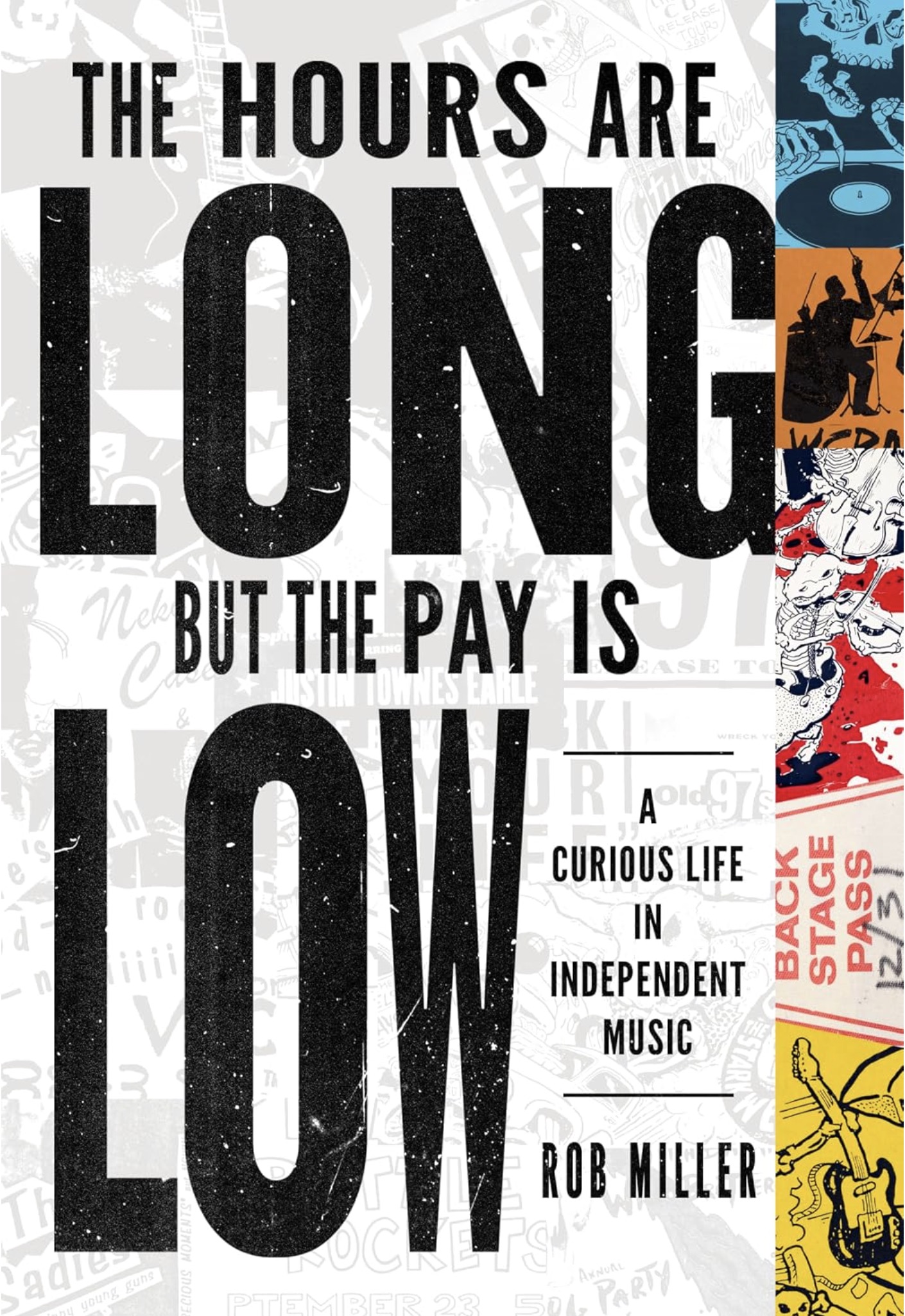
Some distinctive indie labels could have emerged nowhere but in the city of their birth: Sun in Memphis, Motown in Detroit. In his candid, shoot-from-the-hip The Hours Are Long but the Pay Is Low: A Curious Life in Independent Music (315 pages; 3 Fields Books-University of Illinois Press) Bloodshot Records co-founder Rob Miller holds that view of Chicago, where for 25 years (l994-2019) and 300 albums, Bloodshot brought us a “Cash meets Clash” fusion of insurgent punk and country including Mekons, The Waco Brothers, Neko Case, Kelly Hogan, Justin Townes Earle, Alejandro Escovedo, Lydia Loveless, The Bottle Rockets, Wayne Hancock, Scott H. Biram, and Robbie Fulks. Its audience was people “looking to classic country for the substance and excitement they used to find in punk.”
As for Miller himself, “From this compressed and untutored scramble through the swirling, exciting mess of America’s musical landscape, the love of what was between the genres and below the mainstream had seeped into my bones.”
The seeds for Bloodshot were sown during his years at WCBN-FM at University of Michigan, a station that comes across as much like WMBR. “At the time, college radio was a powerful force in underground music, part of a subversive and righteous cause.” Heroes and legends of American roots music would come by to talk and perform on the air. “By way of explaining how every rock & roll song came from the blues, John Lee Hooker sang, a capella, Chuck Berry’s raver Nadine at a slow, mournful tempo. The thought of it still gives me chills.”
Mekons once showed the importance – and their appreciation – of independent college/community radio by visiting WMBR to record a song.
The Hours Are Long is also a foodie love song to a fast-changing Windy City most tourists never see – small clubs and ethnic eateries – as well as some beloved restaurants (no chains) along the highways touring musicians travel.
Awash in witty cynicism, Miller’s well-turned phrases can be a joy, but there can be anger here too. He goes after sacred cows, narrow-mindedness of some listeners, the musical industrial complex, and the Bloodshot acts who did terrible things in his home. A few carefully worded lines may aim to avoid a libel suit stemming from paragraphs on money issues that led to selling the label to Exceleration Music. But in his time helming Bloodshot (as he says of earlier years scouring used-record stores), he had the thrill “of bedlam, of discovery, of the unknown.”